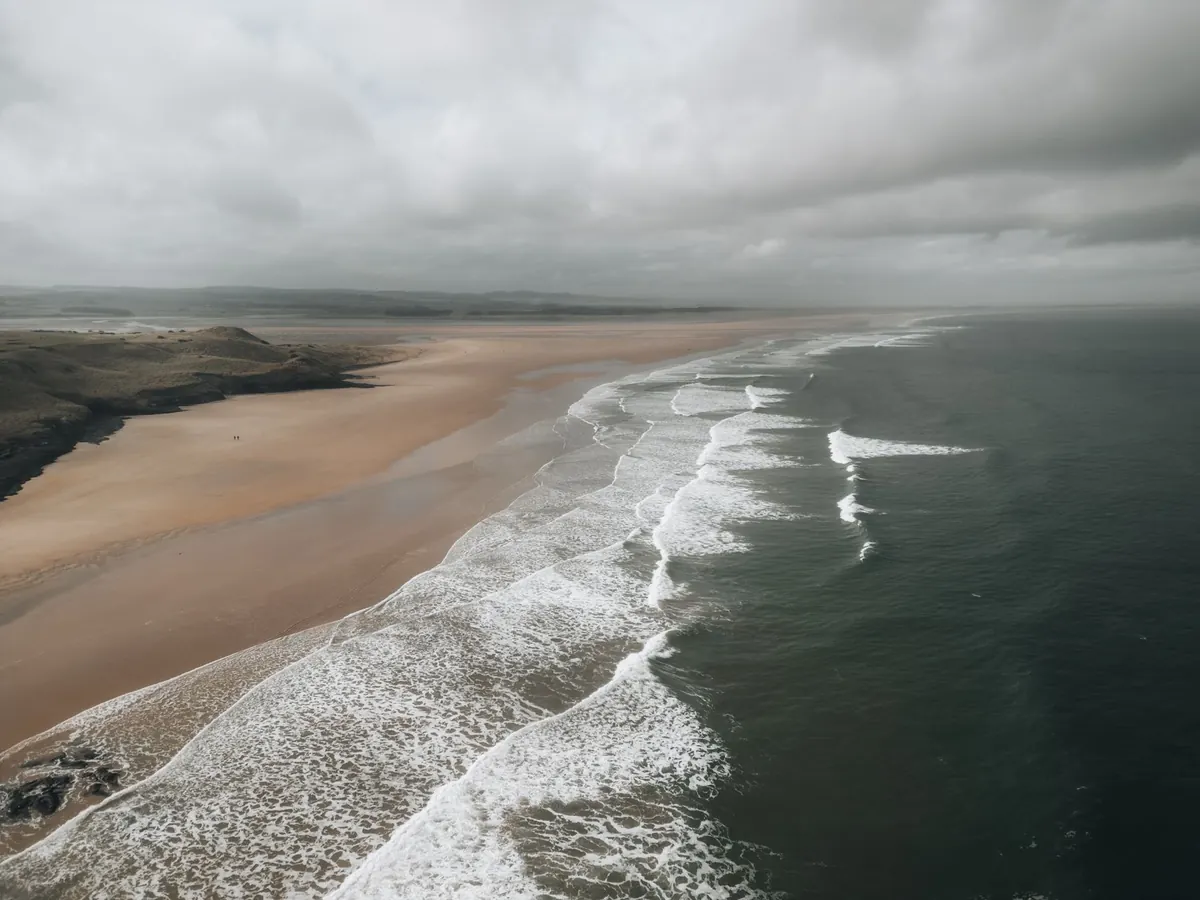
Walk north from Bamburgh on a bright, windy morning and you hear the dunes before you see them: marram hissing, sand shifting, oystercatchers calling somewhere beyond the ridge. Northumberland's coast is famous for its castles and its huge skies, but the low, hummocky strip behind the beach does a quieter job. It holds the shoreline together, filters rainwater, shelters nesting birds and supports plants that grow almost nowhere else.
Those dunes are not scenery. They are working systems, and several of them are under real pressure.
How these dunes formed, and why they matter
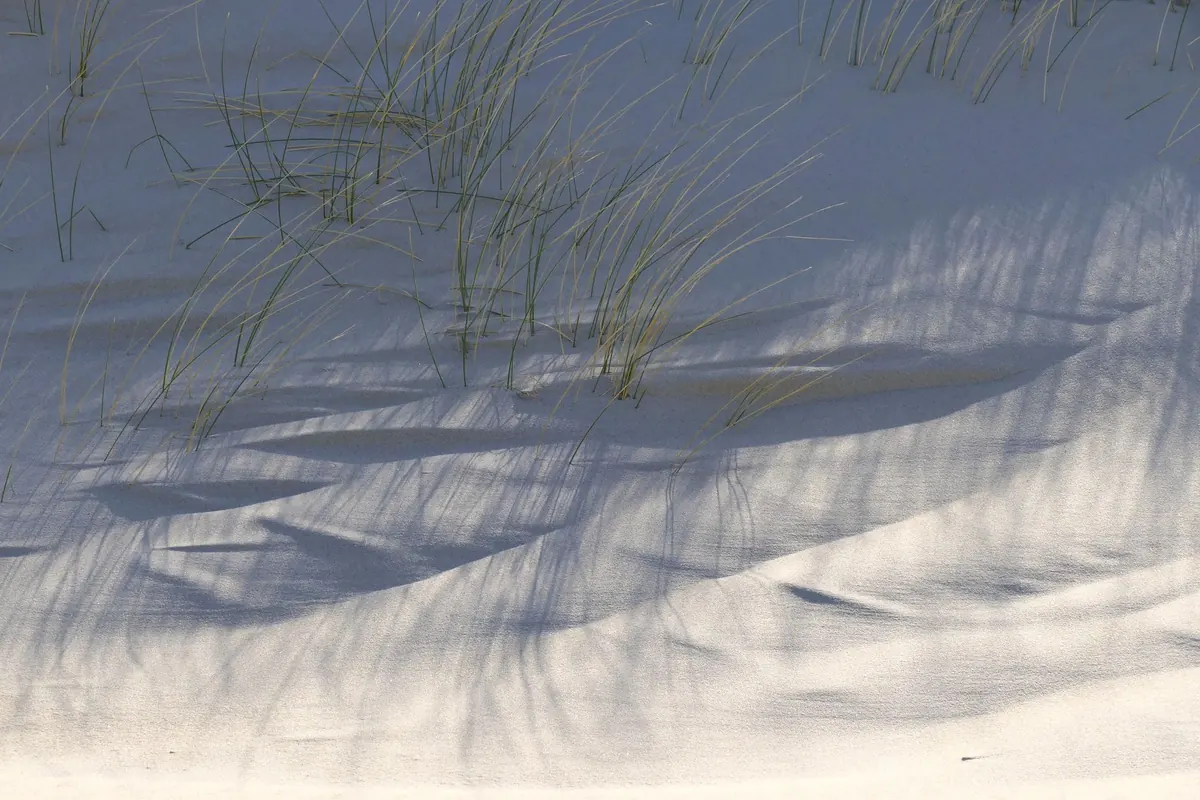
Sand dunes begin with a dry beach and an onshore wind. Sand grains blow inland, hit an obstacle and settle. Marram grass grows up through the accumulation, trapping more sand, and the ridge builds. Move landward and the dunes get older, lower in lime and richer in nutrients; the hollows between them, known as dune slacks, sit close to the water table and fill with wetland plants.
That progression — bare sand, mobile dune, fixed dune, slack, dune heath — is what makes a dune system valuable. Remove one stage and the whole sequence weakens. Northumberland is unusual in England because a long, largely undeveloped stretch of this sequence survives in one run, from the Tweed down through Druridge Bay. Holy Island even has its own orchid, the Lindisfarne helleborine, found on the island's dunes and nowhere else in the world.
The sites worth knowing
Most of the county's important dunes sit inside the Berwickshire and North Northumberland Coast Special Area of Conservation, with additional protection where sites are notified as Sites of Special Scientific Interest. In practice, that means five or six places carry most of the responsibility.
- Lindisfarne National Nature Reserve. Managed by Natural England, this is the largest and most complex dune-and-saltmarsh system in the county. The Snook and the sands at Goswick and Holy Island hold mobile dune, slack and extensive intertidal habitat, and the reserve matters internationally for wintering wildfowl and waders.
- Ross Links. North of Budle Bay, this is one of the least disturbed links in England — broad, grazed dune grassland with a long history of low-intensity agriculture and very little development behind it.
- Bamburgh Dunes. The ridge running north of the castle combines mobile dune, slack and dune grassland, with the village, car parks and a golf course immediately inland.
- Embleton and Newton Links. National Trust land behind Dunstanburgh, notable for dune heath and for slacks that flood in wet winters.
- Beadnell Bay. A long sandy bay with dunes at either end and a beach that supports nesting ringed plover and little terns.
- Druridge Bay. A sweeping eight-kilometre arc of dunes from Amble towards Cresswell, with nature reserves, farmland and former opencast land sitting close behind.
What is actually threatening them
Erosion and coastal squeeze
Dunes are meant to move. A winter storm that cuts a cliff into the dune front is not damage — it is how sand is recycled back onto the beach. The problem comes when the dune cannot roll inland. Where a road, car park, golf course or sea wall sits tight behind the sand, the system is squeezed between rising sea levels and fixed infrastructure, and there is nowhere for it to go. Hard defences in one place also shift wave energy along the coast, so an eroding dune at one end of a bay may be the consequence of engineering at the other.
Recreation and disturbance
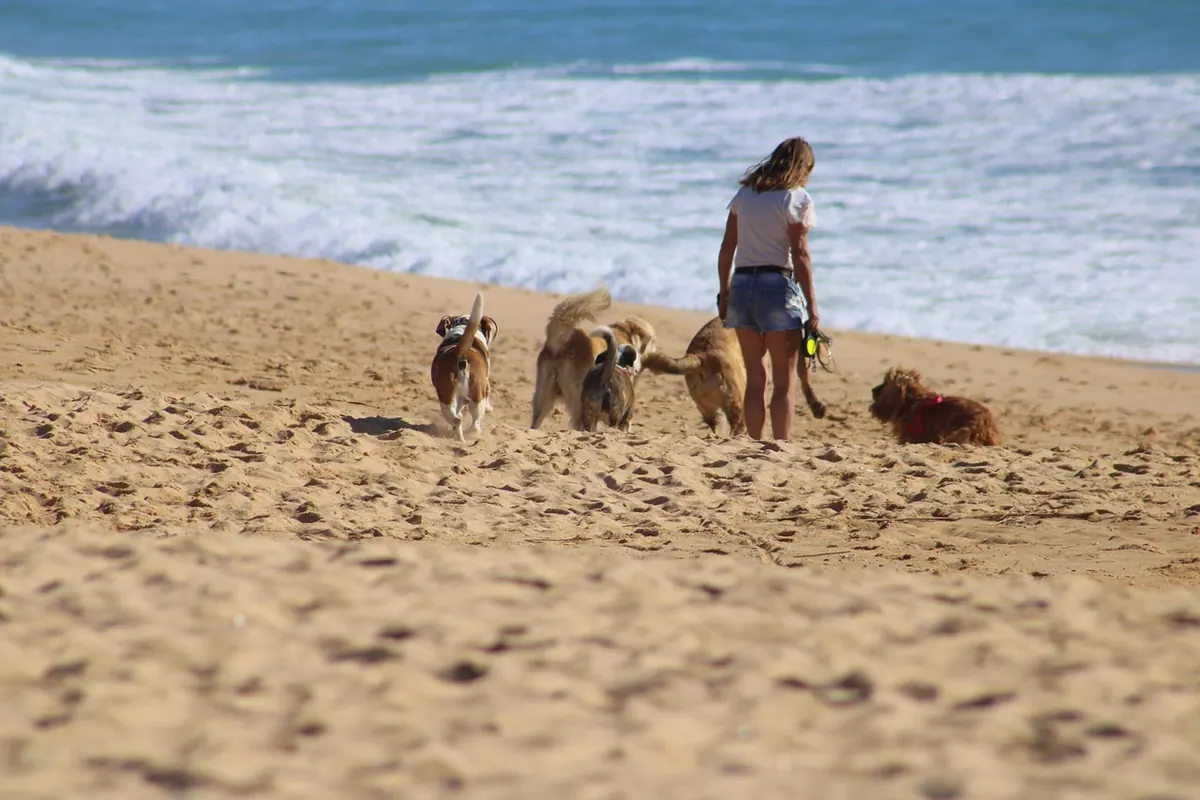
Trampling is the most visible pressure. Every shortcut across a dune kills the marram holding it, and a single bare patch will widen into a blowout as wind gets to work. Dogs off leads in spring and summer push waders and terns off nests, and eggs on open sand are lost quickly to gulls and crows once a parent leaves. Disturbance is not about one careless visitor; it is about the thousandth visitor on the same path.
Scrub, nitrogen and lost bare sand
Much of England's dune loss has been caused by stabilisation rather than erosion. Sea buckthorn, Rosa rugosa, sycamore and dense gorse shade out the specialist plants, while nitrogen drifting in from agriculture and traffic encourages coarse grasses that crowd out the low-growing flora. Without any bare sand, the early-succession species — the ones that make dune habitat distinctive — simply disappear. Some of that scrub was planted deliberately in the past for shelter, which makes it harder to argue for its removal now.
The small things that add up
Litter, fires and BBQs scorch the turf and leave charcoal and melted glass behind. Fly-tipping of garden waste introduces plants that do not belong. Parking on verges crushes the seaward edge of the dune. None of these is dramatic on its own; together, on a busy bank holiday, they leave marks that take years to heal.
What effective conservation looks like here
Good dune management in Northumberland is less about fencing things off and more about restoring movement and variety. The approaches that work include:
- Rejuvenating over-stabilised dunes by clearing scrub, scraping turf and creating bare sand patches where the wind can reach them.
- Restoring dune slacks — clearing drains, removing scrub and letting seasonal flooding return.
- Keeping light grazing going, so turf stays short and flower-rich rather than rank and uniform.
- Routing visitors onto boardwalks and defined paths, and fencing vulnerable nesting areas only for the weeks that matter.
- Monitoring quietly and consistently: fixed-point photographs, plant surveys, bird counts and records of where new erosion is starting.
Volunteer groups, coast-care teams and the rangers who manage reserves and National Trust land do most of this work, often with school groups and local residents alongside them.
Visiting the dunes well
You do not need permission to enjoy these places, and you do not need to stay away. A few habits make a genuine difference. Use the boardwalks and the paths that already exist, even when a shortcut looks harmless. Keep to the beach rather than the dune front, where the sand is most fragile. Between April and August, keep dogs on a lead near nesting birds, and stay well back from any area that has been roped off. Take litter home, leave driftwood where it is, and forget the disposable BBQ.
If you spot something that looks wrong — fly-tipping, a new blowout, a vehicle on the dunes, a fire ring — report it to the reserve manager, the National Trust or the local authority, rather than assuming someone else will. And if you want to do more than visit, most of these sites rely on volunteers for scrub clearance, litter picks and survey work. Turning up once a month is a real contribution to a habitat that took centuries to build.
Photo: urtimud.89 / Pexels