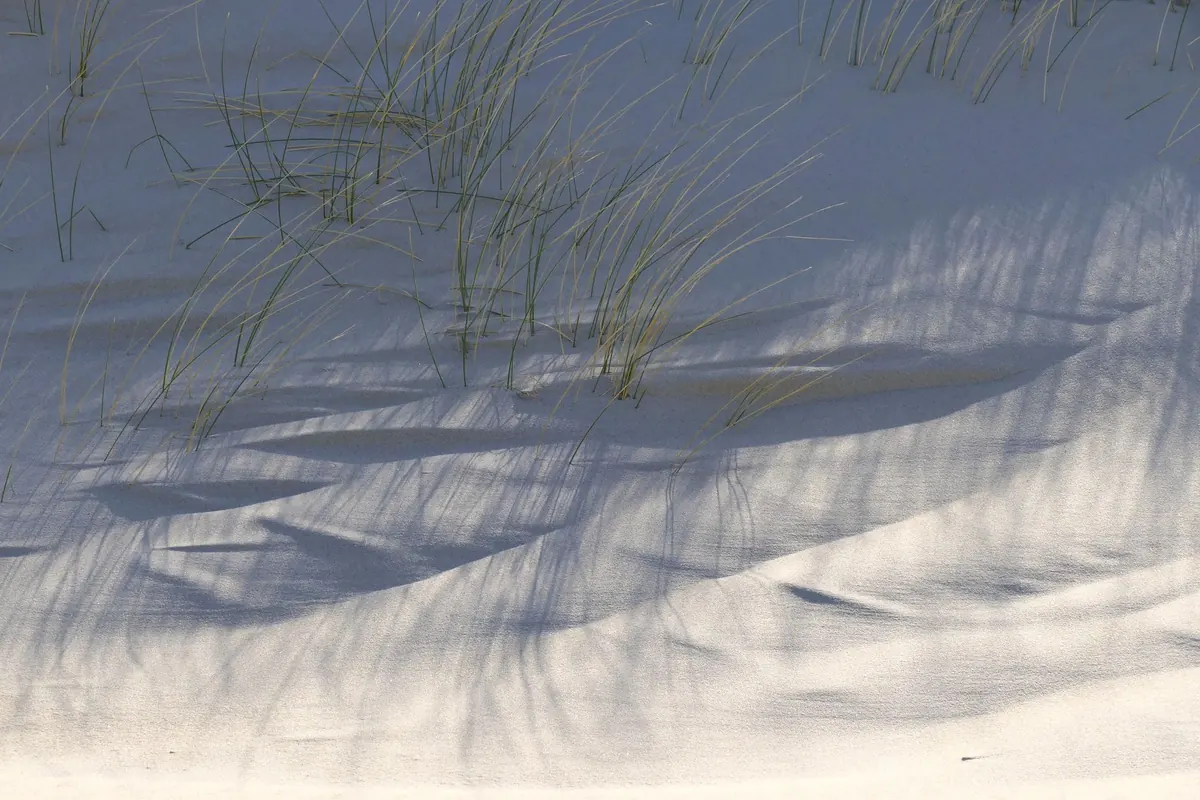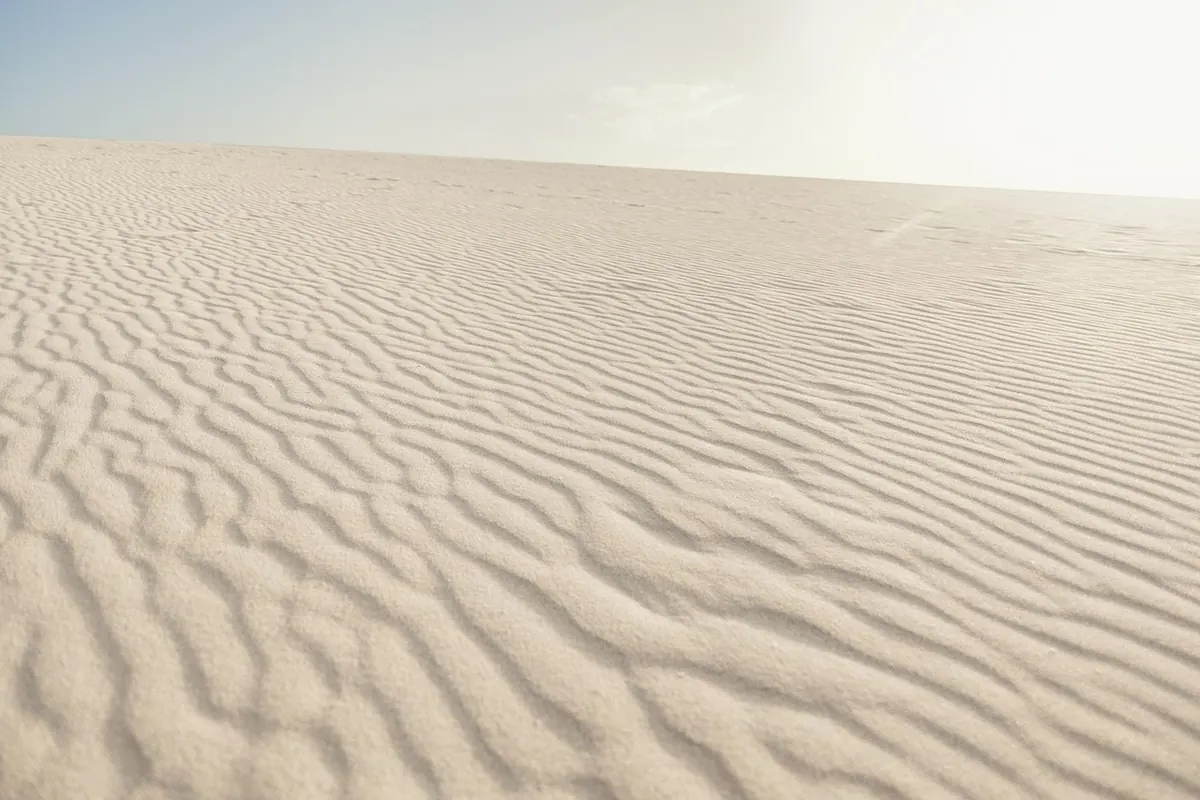
Stand on a beach in Norfolk or Anglesey and a low ridge of sand rises behind you, stitched together by marram grass. Stand at the edge of the Namib or the Rub' al Khali and the ridge ahead is far larger, bare, and has not held a plant in decades. Both are dunes. Both were built by wind. After that, they part company in almost every way that matters.
Two different beginnings
Desert dunes form where there is plenty of loose sand and almost nothing to hold it in place. The sand comes from dry riverbeds, alluvial fans, eroding bedrock and the beds of long-vanished lakes. Wind sorts it by grain size and piles it according to the local wind regime. Where the wind blows mainly from one direction, you get crescent-shaped barchans with horns trailing downwind. Where it swings between two dominant directions, you get long, parallel seif dunes. Where it arrives from every point of the compass, sand piles upward into star dunes that stay roughly where they are rather than travelling.
Coastal dunes work the other way round. Sand reaches the beach from offshore banks, rivers and eroding cliffs, then moves along the shore with longshore drift. At low tide it dries, and the onshore wind lifts it landward. What stops it is vegetation. Sand couch and sea lyme grass catch the first grains; marram grass then grows up through fresh sand fast enough to keep pace with burial, building the dune upward as it goes. On a temperate coast, plants create the dune. In a desert, plants would end it.
Beneath the surface: water, crusts and soil
Desert sand is deep, dry and freely draining. Rain that falls on a dune field sinks quickly, and in some regions it replenishes aquifers that sit under the sand and supply springs and oases far away. Between the dunes, where the sand is finer and more compacted, you often find salt crusts and biological soil crusts — communities of cyanobacteria, lichens and mosses that bind the surface, fix nitrogen and stop wind erosion. These crusts are extraordinarily fragile. A single set of vehicle tracks can break a surface that took years to form.
Coastal dunes have a much shallower architecture but a richer internal life. They form in bands, with the oldest and most developed ground furthest from the sea. Walking inland from the beach crosses decades of ecological succession in a few hundred metres:
- Embryo dunes — low mounds of sand held by sand couch and sea lyme grass, flooded by the highest tides.
- Yellow dunes — the mobile foredune, dominated by marram, with bare sand still moving between tussocks.
- Grey dunes — older, fixed surfaces where lichens and mosses take over and the sand stops shifting.
- Dune slacks — damp hollows where the water table reaches the surface, often supporting rarities found nowhere else nearby.
- Scrub and dune woodland — the end point of succession, unless grazing or cutting holds it back.
Soils change along that gradient too. Shell fragments make young coastal sand alkaline; as organic matter builds up and leaching proceeds, the soil becomes more acidic the further inland you go.
Desert wildlife: specialists in a moving world
Life on desert dunes is shaped by drought, heat and constant movement. The animals that thrive there tend to be nocturnal or crepuscular, live underground, and need very little free water. The Namib's sandfish skink and web-footed gecko effectively swim through loose sand; fringe-toed lizards in North America have fringed feet for grip and flaps that close over their nostrils. Add jerboas, kangaroo rats, sand cats and fennec foxes, plus grazing animals such as gazelles and addax on the Sahara's edges.
What stands out is how narrow some of these ranges are. A species may be tied to a single dune field, or to one type of sand grain, because burrowing and sand-swimming demand particular conditions. Move the sand, or stop it moving, and there is nowhere for that species to go.
Coastal wildlife: a crowded, layered community
Temperate coastal dunes carry far more species per hectare, largely because plants and invertebrates dominate. Grey dunes are among the richest habitats in Britain for lichens and mosses, and for warmth-loving insects such as solitary bees and wasps. Bare, damp sand around slacks supports tiger beetles; dune slacks are strongholds for natterjack toads; sand lizards sun themselves on south-facing slopes in a handful of coastal sites.
Grazing animals do much of the work. Rabbits, and in some places cattle or ponies, keep the sward short and open, which suits orchids, reptilian basking sites and ground-nesting birds. When grazing stops, coarse grasses and scrub move in and the open dune quietly closes over.
Management: opposite problems, same principle
Desert dune managers are usually trying to control movement. Sand drifting onto roads, irrigation channels, farmland and settlements is a serious and expensive problem, and in some dryland regions the supply of new sand has been cut off by dams or altered by changing rainfall. Off-road driving, heavy grazing and groundwater extraction all add pressure.
Coastal dune managers in Britain face the reverse: not too much sand movement, but too little. Coastal squeeze — rising sea levels combined with fixed sea walls, promenades and caravan parks — leaves dunes nowhere to retreat. Add nitrogen deposition favouring rank grasses, a decline in rabbit grazing, invasive sea buckthorn and cotoneaster, and heavy foot traffic, and you get dunes that are greening over at exactly the moment they need to stay dynamic. Practical action tends to look like this:
- Rejuvenate fixed dune. Scrape turf or create small notches in the foredune so wind can move sand inland again, restoring bare ground for invertebrates and pioneer plants.
- Reinstate grazing. Light, well-timed grazing by cattle, ponies or rabbits keeps the sward open without wrecking it.
- Clear scrub in rotation. Sea buckthorn and cotoneaster should be cut and, ideally, followed up with grazing so they do not simply re-grow.
- Redirect feet. Boardwalks, roped routes and clear paths concentrate wear where it does least harm and protect slacks and nesting areas.
- Watch the water. Keep drains and abstraction from lowering the water table, because dune slacks depend on it far more than they depend on rainfall.
Reading a dune for yourself
The quickest way to tell the two systems apart is to look at what holds the sand. If plants are the reason the dune exists, and the interesting ecology lies in the banding from beach to woodland, you are on a temperate coast. If the dune would swallow plants faster than they could grow, and its future is about whether the sand keeps moving at all, you are in a desert system.
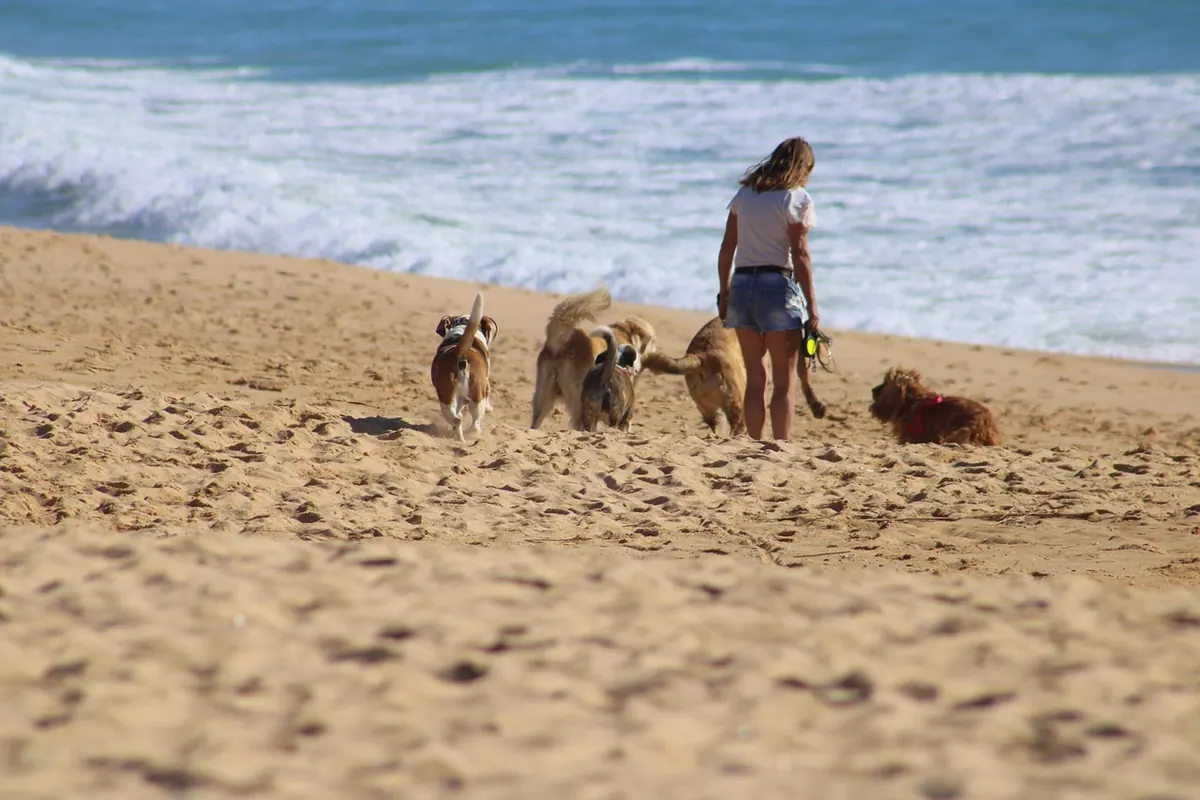
That distinction is useful when you visit. On British coastal dunes, stay on marked paths during the breeding season, keep dogs close where ground-nesting birds are about, and resist the urge to cut across a slack. In dryland dune fields, stay off the fragile crusts between dunes, drive only on established tracks, and carry more water than you think you need. Both habitats are shaped by disturbances we either cause or prevent — which is why the balance is always someone's job, and often a local volunteer group's.
Photo: FeeLoona / Pixabay